

Energy sources of fossil materials such as oil, coal and natural gas are not counted as renewable energy sources, because in their extraction the materials are not renewed (some new formation does in fact take place, but it is exceedingly slow compared with the rate of use).
Biomass for burning, for example timber, counts as a renewable energy source if woodland is grown as fast as it is felled for burning, even if it is not done in the same place.
Geothermal heat is a renewable energy source
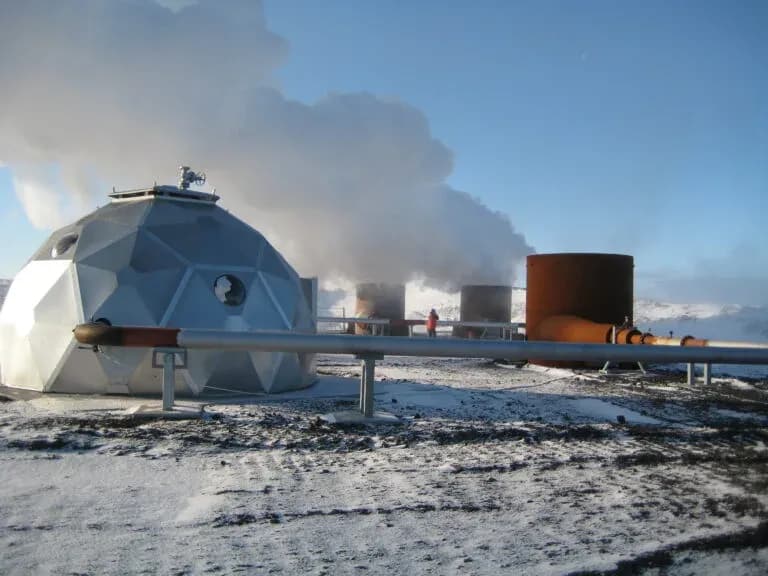
Geothermal heat is defined internationally as a renewable energy source. Geothermal heat originates in the heat flow deep from the hot interior of the Earth and the great heat energy in the crust, which is continually renewed because of radioactivity in the ground. The heat flow is lost through the surface of the Earth out into the atmosphere unless it is used. The heat energy in the crust is enormously great, and only about 0.1% of it would be needed to meet humanity's entire present energy demand for about 10,000 years. Geothermal heat is present everywhere, but in varying amounts and variably accessible. It is technical and financial factors that limit the use of this enormous energy. In some places, as in Iceland, conditions are such that it is easy and fairly cheap to use the geothermal heat; elsewhere very difficult and expensive. When we extract energy from the ground in geothermal areas we are both using the heat flow and taking bound heat energy from the crust. In place of the energy we take, heat energy streams in continually from below. In geothermal production, however, more heat energy is often taken from the ground in small areas than the energy that comes in its place. But the heat reserve bound in the hot rock of the geothermal areas is so great that they generally cool very slowly.
It is worth pointing out that it is possible to use geothermal heat both sustainably and unsustainably.