
News
On water protection and forestry
ÍSOR · 27 May 2025 · 3 min read
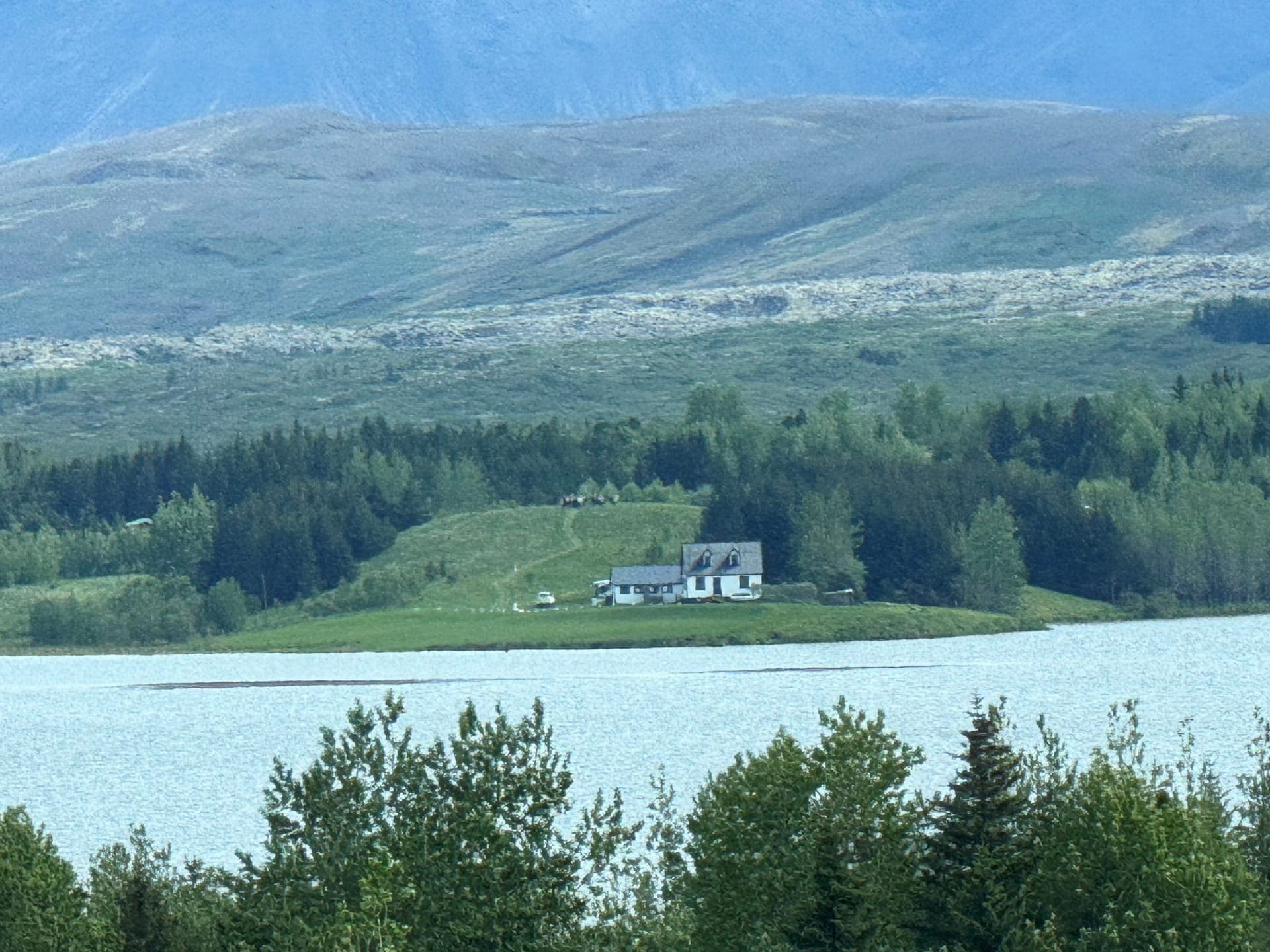
On water protection and forestry in Heiðmörk
On water protection and forestry in Heiðmörk
Íslenskar orkurannsóknir (ÍSOR) is an institution owned by the Icelandic state and provides, among other things, independent consulting in the field of geosciences and earth resources, such as geothermal energy and groundwater, which are truly among the most important resources of the nation.
As has been reported, ÍSOR recently prepared a report for the Forestry Association of Reykjavík (Skógræktarfélag Reykjavíkur), which deals with the association's access to and use of its forest in Heiðmörk, with regard to forestry and water protection. In it, among other things, the history of the coexistence of the association and Orkuveita Reykjavíkur and its subsidiary Veitur is discussed, and possible ways are pointed out to ensure water protection for the capital area while at the same time ensuring continued possibilities for general outdoor recreation in the area.
In an interview in RÚV's news program yesterday, 26 May, it was implied that ÍSOR considered the water from Heiðmörk "not good enough" and that it was an unequivocal proposal to move the water-extraction area outside the Heiðmörk area. Neither is correct. Nowhere is it claimed in the report that the water is not good enough. The idea is indeed discussed in the report, as one possibility, of moving the water-extraction area higher up in the land, but at the same time it is pointed out that it is likely to be both costly and time-consuming.
It is important in a major matter of public interest such as this that things be presented correctly, and therefore ÍSOR sees reason for this clarification. Below the main findings of the report are highlighted, but interested parties are advised that it is possible to access it in its entirety via the link below.
Main findings of ÍSOR's report for the Forestry Association of Reykjavík
The ideas discussed in the report aim to lay the groundwork for the continued coexistence and cooperation of Veitur and the Forestry Association of Reykjavík in the water-protection and outdoor-recreation areas in Heiðmörk. The coexistence has been to the benefit of both and has proceeded without incident for 75 years. No events or accidents have occurred that have disrupted the water production or affected the water quality. It can be asserted that the forestry has benefited the water protection, because vegetation and soil cover is a constantly active pollution defense. It has not been demonstrated that the risk of pollution has been increasing in the water-protection areas in recent years, and there are many indications that it will rather decrease than otherwise in the coming years, along with the advent of electrically powered vehicles and work machines. The water-protection policy needs to be vigilant, but it is not the only consideration that must be taken into account. Veitur have the possibility of considerable flexibility in their operations and activities in the area.
If the most stringent water-protection measures are to be applied, which exclude other activity and traffic in the water-protection areas apart from the water extraction itself, mitigation measures can be pointed out to accommodate the interests of the Forestry Association.
- Examine whether it is not safe to narrow the well area around Myllulækjartjörn and maintain the outdoor-recreation possibilities and walking paths that are there. Another option is to discontinue water production in the Myllulækur area and move the production up into Vatnsendakriki, which has considerable production capacity beyond the current production. Convert the Myllulækur area into a reserve or future water source.
- No hydrological arguments support the necessity of moving the Forestry Association's Timber Processing (Viðarvinnsla) outside the water-protection area.
- Activate the springs at Nátthagavatn in cooperation with Mosfellsbær and relieve the load on the Heiðmörk area.
- Consider moving the well areas of Gvendarbrunnar and Jaðar higher up into the groundwater current, up into Grenkriki and the area around there. This is a costly undertaking but quite feasible.
- Work on more interconnections of the utilities in the capital area and shared use of the water-production areas. In this way, greater operational security and flexibility in production and better use of the water reserve can be achieved.
Forestry and water protection
27.05.2025